







Excerpts from the White Paper China's Energy Transition
Digital Energy Storage Network News:
I. Remarkable Achievements in China’s Energy Transition and Development
Guided by the new energy security strategy over the past decade, China has thoroughly promoted the transformation of energy production and consumption patterns. Its capacity to guarantee energy supply has been comprehensively enhanced, and historic breakthroughs have been achieved in the green and low-carbon development of energy. These efforts have effectively underpinned high-quality economic and social development, better met people’s growing needs for a better life, and provided solid support for building a Beautiful China.
▶ China’s energy transition has put the development of clean energy on a fast track. In 2023, the share of clean energy consumption reached 26.4%, up 10.9 percentage points from 2013, while the proportion of coal consumption fell by a cumulative 12.1 percentage points. The total installed power generation capacity hit 2.92 billion kilowatts, of which clean energy power generation capacity stood at 1.7 billion kilowatts, accounting for 58.2% of the total installed capacity. Clean energy generated around 3.8 trillion kilowatt-hours of electricity, representing 39.7% of total power generation, an increase of roughly 15 percentage points compared with 2013. Over the decade, newly added clean energy power generation accounted for more than half of the growth in the whole society’s electricity consumption, and the green content of China’s energy sector kept rising.
▶ China’s energy transition underpins high-quality economic and social development. Energy security has been further consolidated. Primary energy production capacity rose by 35% in ten years, strongly supporting steady and sound economic growth. Cumulative fixed-asset investment in the energy sector reached approximately 39 trillion yuan over the decade, significantly driving investment growth in upstream and downstream industrial chains and related sectors. A host of major energy projects have been completed and put into operation. A complete industrial chain for energy equipment manufacturing has taken shape. Technological innovation has accelerated in new energy, hydropower, nuclear power, power transmission and transformation, new energy storage and other fields, turning the clean energy industry into a new pillar of the modern industrial system.
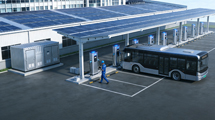
▶ China’s energy transition meets people’s needs for a better life. Over the past decade, energy supply and demand have remained balanced with generally stable energy prices, effectively safeguarding energy security for over 1.4 billion people. Per capita residential electricity consumption nationwide has nearly doubled from about 500 kWh to close to 1,000 kWh. The number of natural gas users has reached 560 million. In the World Bank’s global Ease of Doing Business assessment, China’s ranking for the indicator “access to electricity” rose to 12th. The energy industry has fully supported poverty alleviation and rural revitalization. The total central budget investment for upgrading rural power grids exceeded 100 billion yuan, stimulating increased capital input from local governments and enterprises. In 2015, China historically solved the electricity access problem for populations without power supply nationwide. The installed capacity of household photovoltaics in rural areas reached 120 million kilowatts, covering more than 5.5 million farming households. It brings an annual income increase of 11 billion yuan for farmers and creates around 2 million jobs. Efforts continue to meet public demand for green energy consumption. By the end of 2023, the clean heating rate in northern China was nearly 80%, and the number of charging infrastructure facilities nationwide surged from fewer than 100,000 to nearly 8.6 million.
▶ China’s energy transition advances in tandem with high-level ecological and environmental protection. Over the decade, the average coal consumption for power supply of coal-fired power units dropped to 303 grams of standard coal per kWh. The emission levels of sulfur dioxide and nitrogen oxides from advanced units are comparable to the limit values of gas-fired power generators. From 2013 to 2023, energy consumption per unit of GDP decreased by more than 26% cumulatively. China has continuously upgraded the quality of refined oil products to an internationally advanced level. The number of coal-fired boilers nationwide has been cut by over 80%. The replacement of bulk coal for winter heating in plain areas has been basically completed in the Beijing-Tianjin-Hebei region and surrounding areas as well as the Fenwei Plain. Green and intensive development of energy resources has been realized, green development technologies are widely applied, and the ecological environment of mines has improved markedly. New “PV +” ecological restoration models have been promoted in deserts, Gobi areas, wastelands and coal mining subsidence areas. The average concentration of PM2.5 fell by 54% cumulatively, and the number of heavy pollution days dropped by 83%, providing strong support for building a Beautiful China.
▶ China’s energy transition has made important contributions to global energy transition and the building of a clean and beautiful world. In 2023, China’s investment in energy transition reached 676 billion US dollars, the highest in the world. Over the past decade, China has supplied high-quality clean energy products and services worldwide, continuously boosted scientific and technological innovation, and promoted rapid iteration of new energy technologies, which has greatly driven down global costs for wind and photovoltaic power. China continues to expand opening-up and cooperation, carrying out green energy project cooperation with more than 100 countries and regions. A large number of landmark projects in nuclear power, hydropower and new energy have been completed and commissioned one after another. In 2023, exported wind and photovoltaic products helped other countries cut carbon dioxide emissions by approximately 810 million tonnes. China’s new energy industry has not only enriched global supply and eased global inflationary pressure, but also made outstanding contributions to global climate change response and green transition.
II. Consolidate the Foundation for Green Energy Consumption
China firmly establishes and practices the philosophy that lucid waters and lush mountains are invaluable assets. It plans for the transformation of development models from the perspective of harmonious coexistence between humanity and nature, strives to change the path dependence on energy resources, and promotes the comprehensive green transition of economic and social development.
(I) Strengthen institutional constraints on energy conservation and carbon reduction
China always adheres to the priority of energy conservation, curbs unreasonable energy consumption, and focuses on transforming resource utilization modes and improving resource utilization efficiency. ● Make good use of the dual control of energy consumption as the guiding tool. ● Build a multi-dimensional energy management system. ● Innovate market-based energy conservation approaches.
(II) Promote energy conservation and efficiency improvement in key sectors
Industry, construction, transportation and public institutions are major energy consumers in society and form the foundation of energy conservation and efficiency improvement. By fully implementing energy efficiency standards, popularizing high-efficiency products and phasing out backward production capacity, energy efficiency in key sectors has kept improving. ● Tap the energy-saving potential of the industrial sector. ● Promote green and energy-efficient buildings. ● Build a clean and efficient transportation system in all respects. ● Develop resource-conserving public institutions.
(III) Foster new models of green energy consumption
China actively guides the whole society to prioritize the use of green energy, vigorously promotes the fine Chinese tradition of diligence and frugality, and shifts lifestyles and consumption patterns toward simplicity, moderation, green low-carbon and civilized health. ● Boost consumption of renewable energy. ● Promote electrification and low-carbon transition of end-use energy. ● Practice green and low-carbon lifestyles.
III. Accelerate the Development of a New Energy Supply System
Based on national conditions and development stages, China balances new energy and traditional energy. While guaranteeing reliable energy supply, it pushes forward energy transition. It will greatly enhance the reliable substitution capacity of non-fossil energy, give play to the supporting and regulating role of fossil energy, and accelerate the development of a diversified, clean, safe and resilient new energy supply system.
(I) Promote high-quality development of non-fossil energy
Accelerating the development of non-fossil energy is an inevitable requirement for strengthening ecological civilization construction, advancing green and low-carbon economic and social development, and steadily pushing forward carbon peaking and carbon neutrality. It is also the only path to develop green productive forces. ● Achieve leapfrog development of wind and photovoltaic power generation. ● Develop hydropower in light of local conditions. ● Pursue active, safe and orderly development of nuclear power. ● Promote the development of biomass energy, geothermal energy and marine energy.
(II) Boost the coordinated development of traditional and new energy
Traditional energy and new energy are complementary and substitutive. While vigorously developing new energy, we should also leverage the supporting and backstopping role of traditional energy to advance their coordinated development. ● Promote clean and efficient development and utilization of coal. ● Advance the green transition of oil and gas development. ● Promote coordinated development of traditional and new energy.
(III) Improve the resilience of the energy system
With the large-scale development of new energy and changes in power load characteristics, the operation of the energy and power system faces more uncertainties. It is urgent to enhance the system’s flexible regulation capacity and continuously improve its capability for safe operation and risk resistance. ● Strengthen interconnection of energy pipeline networks. ● Enhance energy reserve and emergency response capacity. ● Upgrade the regulation capacity of the energy system.
IV. Vigorously Develop New Quality Productive Forces in the Energy Sector
China thoroughly implements the innovation-driven development strategy. Focusing on consolidating and extending competitive industries, upgrading traditional industries and accelerating the cultivation of future industries, it promotes coordinated development of the energy industrial chain and innovation chain, and continuously raises the “new” content of energy.
(I) Improve the energy science and technology innovation system
China adheres to innovation as the primary driving force, strengthens top-level design and overall planning for energy S&T innovation, and speeds up the building of a collaborative innovation system with enterprises as the main players, the market as the guide, and in-depth integration of industry, academia, research and application. ● Strengthen collaborative innovation in energy science and technology. ● Stimulate the vitality of innovation entities.
(II) Accelerate scientific and technological innovation for energy transition
Targeting the global frontiers of energy science and technology, China focuses on key energy areas and major demands, intensifies research on core technologies, vigorously develops new energy technologies and industries, and promotes the green transition of traditional energy industries. ● Vigorously develop green energy technologies. ● Raise the level of clean and efficient utilization of traditional energy.
(III) Cultivate new growth drivers for energy industrial upgrading
China vigorously advances the deep integration of digital technologies and the energy industry, fostering new technologies, new forms of business and new models, empowering the advanced development of industrial foundations and the modernization of industrial chains in the energy sector. ● Drive the transformation and upgrading of the energy industry through digital and intelligent technologies. ● Cultivate new business forms and models in the energy sector.
V. Advance the Modernization of Energy Governance
Through deepening reform, improving policies, strengthening planning guidance and legal safeguards, China gives full play to the decisive role of the market in resource allocation and better leverages the role of the government, creating a sound development environment for the green and low-carbon energy transition.
(I) Build a fair, open and effectively competitive energy market
China further advances market-oriented energy reform, accelerates the development of a market structure and system featuring effective competition, improves the mechanism whereby energy prices are mainly determined by the market, pushes forward the development of a unified national market, removes blockages in the energy market, facilitates efficient and smooth market operation, and creates a stable, fair, transparent and predictable environment for all market entities. ● Continue to deepen market-oriented energy reform. ● Build a unified national energy market. ● Improve the energy price formation mechanism.
(II) Strengthen government guidance and services
China speeds up the transformation of government functions, gives play to the strategic guiding role of national development plans, strengthens coordination of macro policies such as fiscal, taxation, investment and financing, enhances market supervision, optimizes public services, and ensures the organic integration of efficiency and equity in energy transition. ● Strengthen planning guidance. ● Increase policy support. ● Improve supervision efficiency.
(III) Strengthen legal safeguards for energy transition
China adheres to sound legislation, strict law enforcement and impartial judicature, gives full play to the role of the rule of law in consolidating fundamentals, stabilizing expectations and serving long-term interests, and raises the level of law-based energy governance. ● Improve the legal system. ● Elevate law-based administration. ● Enhance judicial services for energy.
VI. Contribute to Building a Community with a Shared Future for Mankind
While pushing forward its own energy transition, China actively acts as a promoter and contributor to global energy transition. Upholding the principle of extensive consultation, joint contribution and shared benefits, it works with all countries to pursue sustainable global energy development and contributes China’s strength to fostering a fair, just, balanced and inclusive global energy governance system.
(I) China injects new momentum into global green development
China actively practices the green development philosophy, unswervingly presses ahead with the transformation of development models, carries out extensive international energy cooperation, and delivers “Chinese impetus” for global green development. ● China’s green energy development serves as an engine for global energy transition. ● China’s new energy industry supplies green power for the world. ● China’s expanded opening-up creates new opportunities for deepening international cooperation on clean energy.
(II) Promote green energy cooperation under the Belt and Road Initiative
Upholding the principle of extensive consultation, joint contribution and shared benefits and the vision of openness, greenness and integrity, China pursues high-standard, sustainable and people-centered goals. It continues to deepen energy transition cooperation with all countries under the Belt and Road Initiative framework, making “green” the defining feature of Belt and Road energy cooperation to jointly achieve sustainable development. ● Continuously advance green energy cooperation under the Belt and Road Initiative. ● Jointly build high-level energy cooperation platforms.
(III) Jointly advance sustainable global energy development
As a responsible major developing country, China stands ready to work with all nations to improve the clean energy industrial and supply chains, share knowledge and experience, and jointly advance the green and low-carbon energy transition. It will make unremitting efforts for sustainable global energy development and the building of a community with a shared future for mankind. ● Deepen practical cooperation on energy transition. ● Jointly maintain the stability and smooth operation of global energy industrial and supply chains. ● Improve global energy accessibility. ● Jointly address the challenges of global climate change.