








Vanadium Redox Flow Batteries Usher in a Window of Opportunity for Promotion
Polaris Energy Storage News: “During the 14th Five-Year Plan period, vanadium redox flow batteries in China will embrace a prime opportunity for large-scale promotion. As vanadium redox flow battery energy storage demonstration projects across various regions are launched and successfully technically verified, the next five years are expected to serve as a critical window for flow batteries to move from maturity to widespread deployment,” said Liu Qinghua, head of energy storage technology at National Energy Group Beijing Low-Carbon Clean Energy Research Institute (hereinafter referred to as the Low-Carbon Institute), in a recent interview with reporters.
Since the start of this year, vanadium redox flow battery projects have been successively commissioned in Xinjiang, Fujian, Liaoning and other regions in China. As a “rising star” in the field of large-capacity energy storage, how will flow batteries gain market favor amid fierce competition as the energy storage market continues to expand?
Rapid cost reduction driven by technological iteration
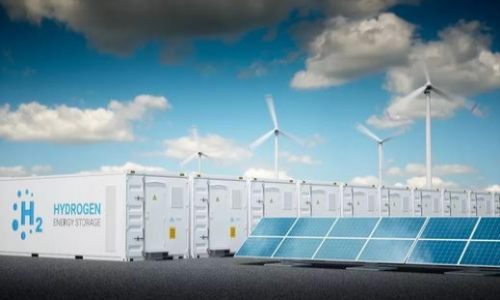
In recent years, China's installed energy storage capacity has been in a stage of rapid growth. Under the global tide of the "green economy," the call for pairing renewable energy with energy storage has also strongly boosted the energy storage market. As a type of electrochemical energy storage, flow batteries have attracted great industry attention due to advantages such as large capacity and high safety. Among them, vanadium redox flow batteries are even more favored by researchers because of their good battery performance.
It is understood that vanadium redox flow batteries have higher safety performance due to their water-based energy storage medium. At the same time, vanadium redox flow batteries have obvious competitive advantages in key performance indicators such as cycle life, levelized cost of electricity over the full lifecycle, resource sustainability, and resource recyclability. For many years, researchers at home and abroad have been continuously promoting cost reduction pathways for this emerging battery technology.
In Liu Qinghua's view, innovation in the design of high-power-density battery stacks is an important breakthrough for cost reduction. The reporter learned that the latest research results of the Low-Carbon Institute show that innovation in the stack design of vanadium redox flow batteries can effectively improve battery power density. With this achievement, the Low-Carbon Institute also won the "2020 China Energy Storage Industry Best Frontier Energy Storage Technology Innovation Award" from the organizing committee of the China International Energy Storage Conference. Liu Qinghua told the reporter: "Compared with conventional vanadium redox flow batteries, the latest vanadium redox flow battery developed by the Low-Carbon Institute has significantly improved energy storage stack power density and battery energy efficiency. In addition, the cost has also dropped by about 30%. This technology of the Low-Carbon Institute has obvious cost-performance advantages."
As battery technology continues to iterate and update and costs continue to decline, industry experts generally believe that vanadium redox flow batteries already have the conditions for commercial development. Yan Chuanwei, a researcher and professor at the Institute of Metal Research, Chinese Academy of Sciences, once publicly stated that vanadium redox flow batteries are currently the most mature flow batteries. Considering the advantages of flow batteries themselves, vanadium redox flow batteries are a relatively ideal technology for meeting the industrialization requirements of large-scale energy storage, and their technical performance and cost have also reached a level suitable for large-scale development.
Demonstration Projects Have "Settled" in Multiple Places
The reporter learned from public information that vanadium redox flow battery demonstration projects have been implemented in many regions of China. On September 23 this year, the Xinjiang Aksu Vanadium Redox Flow Battery Industrial Park project held a groundbreaking ceremony. The project is expected to form 100 MW of vanadium battery energy storage equipment production capacity, playing an important role in local power grid peak shaving. In the same month, China's only national demonstration project for a chemical energy storage peak-shaving power station, the Dalian Flow Battery Energy Storage Peak-Shaving Power Station, also launched its 220 kV transmission project. The advancement of this project also means that the application of flow batteries in the energy storage field has entered a new stage.
Liu Qinghua told the reporter that, judging from the operation of earlier demonstration projects, vanadium redox flow energy storage has complete functions, and individual energy storage stations also have advantages in scale. Safety and reliability have been fully verified. Some data show that by the end of 2019, there were more than 200 vanadium redox flow battery technology demonstration application projects worldwide, and the earliest project has been in operation for more than 20 years.
Industry insiders generally believe that under current technological development conditions, large-capacity, fast-response vanadium redox flow battery energy storage systems can have certain market space in various future energy storage application scenarios. Specific application scenarios may include renewable energy paired with storage, grid-side energy storage, thermal power frequency regulation, and emergency power protection for urban energy storage stations.
Industrialization Bottlenecks No Longer Exist
Relevant data show that by the end of 2019, among energy storage projects already in operation in China, pumped storage accounted for more than 93% of total installed capacity, while electrochemical energy storage, including lithium-ion batteries, lead-acid batteries, and flow batteries, accounted for about 5%. Among electrochemical energy storage installations, flow batteries accounted for about 2%. At the same time, lithium-ion batteries accounted for more than 75% of installed capacity. Within the energy storage industry, lithium-ion batteries still hold a "dominant" position.
Liu Xiaolu, Vice President of the Smart Energy Business Unit of Tianneng Battery Group Co., Ltd., pointed out: "Compared with other electrochemical energy storage technology routes, lithium-ion batteries are easier to standardize and modularize, and are also more capable of flexible deployment. China's lithium-ion battery technology is already in a leading position globally, and for some time in the future, lithium-ion batteries are likely to remain the mainstream in the energy storage industry."
Under such circumstances, how will flow batteries expand their market share among numerous battery technology routes?
In Liu Qinghua's view, with the successful development of high-power-density vanadium redox flow battery stacks, the maturity of a new generation of vanadium redox flow battery technology, and the participation of more enterprises in the upstream industrial chain, the competitiveness of vanadium redox flow batteries in areas such as initial investment cost and system efficiency will continue to improve.
Yan Chuanwei also pointed out that in the past two or three years, vanadium redox flow battery technology has advanced by leaps and bounds. Now this technology has been able to form a complete R&D system, and there are no insurmountable difficulties or bottlenecks in industrialization development.
"The emergence of high-power-density vanadium redox flow battery stacks provides foundational technical support for the development of a new generation of low-cost vanadium redox flow batteries, and also provides an opportunity to promote industrial chain integration. Technological innovation will continue to attract electrolyte developers with strong price competitiveness, highly reliable system integrators, and large-scale capital. Thereafter, it will also provide a foundation for further reducing the cost of energy storage systems," said Liu Qinghua.
Original Title: Vanadium Redox Flow Batteries Usher in a Window of Opportunity for Promotion
Disclaimer: The above content is reprinted from Polaris Power News Network, and the content published does not represent the position of our company.