



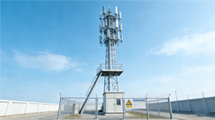




Make New Energy an Important Resource for Power Grid Frequency Regulation
Digital Energy Storage Network News:
At 12:00 on December 11, inside the power dispatching and control hall of Northwest Branch of State Grid Corporation of China, Chen Li, the main dispatcher, kept a close eye on real-time output data of various wind farms and photovoltaic power stations displayed on the monitoring screen.
"New energy output is high during this period, and the frequency regulation capacity of conventional units is relatively weak. We need to pay close attention to the operation status of new energy units," Chen Li told his colleagues. To guarantee grid frequency stability under extreme conditions, they calculated unit output data and confirmed that more than 2 gigawatts of new energy units in Northwest China could participate in primary frequency regulation of the power grid and achieve second-level response in emergencies.
Rich in coal resources and blessed with abundant wind and solar energy — Northwest China is a major energy base of China, with exploitable wind and solar resources exceeding 160 billion kilowatts. Such massive new energy resources make Northwest China an important "test bed" for the construction of the new power system. By the end of 2023, the Northwest Power Grid had become China’s first regional power grid with new energy as its main installed power source.
The large-scale grid connection of new energy power sources raises the green share of electricity, yet imposes higher requirements on power grid operation. As a critical parameter for securing safe and stable grid operation, grid frequency does not interact favorably with new energy units.
"Traditional grid frequency regulation mainly relies on thermal power and hydropower units. Such conventional units feature strong frequency regulation capability and are easy to control," said Chen Li. "New energy units do not inherently have frequency regulation capability. Besides, the volatility and intermittency of their output add to the grid’s frequency regulation burden."
Since the start of the 14th Five-Year Plan period, the Northwest Power Grid has seen an annual new installed capacity of 36 gigawatts of new energy generation, with 11 operational HVDC transmission projects. Its cross-regional power delivery scale ranks first among all regional power grids in China. Against the backdrop of accelerated development of the new power system, faced with challenges including large-scale grid integration of new energy and increasingly complex grid structure, how does the Northwest Branch of State Grid ensure grid frequency stability?
"We adopt fast frequency response control technology to turn new energy into an important resource for grid frequency regulation," introduced Ren Jing, Director of the Dispatching and Control Center of the Northwest Branch of State Grid. "At present, new energy units with an installed capacity of over 40 gigawatts in Northwest China can participate in primary frequency regulation of the power grid, ranking first among all regional power grids nationwide."
Turning unstable new energy into a regulating resource for grid frequency stability stems from a project launched by the Northwest Branch of State Grid in 2016.
Eight years ago, new energy installed capacity accounted for one-third of the total power installed capacity in Northwest China. Even though the scale of new energy installation and the complexity of grid structure were far less than today, the structural shortage of frequency regulation resources brought by grid-connected new energy gradually emerged in the Northwest Power Grid.
"After a large number of new energy units were connected to the grid, the proportion of installed capacity of conventional units declined, and the available fast frequency response resources of the grid decreased accordingly. Coupled with the gradual expansion of HVDC power delivery, the Northwest Power Grid urgently needed new energy to take part in primary frequency regulation to improve the system’s ability to withstand power shocks," Ren Jing explained.
Therefore, targeting the goal of enhancing new energy’s support for grid frequency stability, the Northwest Branch of State Grid pushed forward the project titled Research and Application of Key Technologies for Multi-source Collaborative Control of Sending-end Power Grids with High Proportion of New Energy.
At that time, no new energy stations nationwide possessed fast frequency response capability. The Northwest Branch of State Grid carried out pioneering research from scratch. How to solve the problem? The breakthrough was found in conventional power units.
"Since there were no available cases for reference, we followed the primary frequency regulation control logic of conventional power units and tried to add primary frequency regulation functions to the active power control systems of new energy stations," said Wang Zhiwei, Deputy Director of the Dispatching and Control Center of the Northwest Branch of State Grid.
Following this approach, the project team carried out pilot retrofits at 10 new energy stations. Referring to the primary frequency regulation verification methods for conventional power units, they innovatively conducted a series of fast frequency response tests for new energy. The team not only verified the feasibility of new energy units participating in grid fast frequency response, but also summarized and put forward relevant performance requirements.
Having resolved the question of "whether it can be done", the next task was to figure out "how to do it". Grid frequency regulation requires coordinated operation of various types of power sources. To apply new energy to practical grid frequency regulation, wind and solar power need to better coordinate with thermal and hydropower.
At 17:14 on December 14, 2023, frequency fluctuation occurred in the Northwest Power Grid. Various power sources acted rapidly in accordance with preset frequency regulation parameters to jointly reduce output, bringing the grid frequency back to the stable range within merely 5 seconds.
The successful operation benefited directly from the research outcomes of the project. On the basis of completing pilot retrofits and systematic tests for new energy stations, the project team took into account the differences in frequency regulation between new energy and conventional power sources. By optimizing control parameters, it proposed a tiered collaborative primary frequency regulation control strategy for multiple types of power sources, enabling efficient coordination and comprehensive utilization of conventional units and new energy units in grid frequency regulation.
Technologies related to fast frequency response control of new energy have been promoted across five provinces and autonomous regions in Northwest China since 2018. They have successfully withstood multiple actual grid fault disturbances and helped the Northwest Power Grid build a frequency safety prevention and control system.
As the structure of the Northwest Power Grid grew more complex, the project team launched a series of optimization studies, incorporating new energy into more complex scenarios such as tiered utilization of frequency regulation resources and optimized control of cascading sections. The application of relevant achievements promoted the capability of new energy primary frequency regulation from "existence" to "excellence", lifting the utilization rate of key outgoing transmission channels for new energy in Northwest China by 8 percentage points.
The project results have also been widely applied in new energy stations and new energy equipment manufacturers. At present, the active frequency control devices for new energy stations developed by the project team have been deployed in nearly 300 new energy stations across Northwest China. The hardware-in-the-loop test platform for new energy station control developed by the team can conduct tests on more than 20 types of devices and systems with a market share exceeding 80%.
The outcomes of the project Research and Application of Key Technologies for Multi-source Collaborative Control of Sending-end Power Grids with High Proportion of New Energy have extended frequency regulation resources of the Northwest Power Grid to all types of power sources, reaching an internationally advanced level overall.
"The series of results of this project have tackled the technical bottleneck restricting new energy consumption due to frequency prevention and control risks, and provide support for the construction of the new power system," introduced Ma Xiaowei, Deputy Chief Engineer of the Northwest Branch of State Grid. In the first three quarters of this year, the newly grid-connected new energy capacity of the Northwest Power Grid reached 40.3 gigawatts, a year-on-year increase of 38.4%. During the summer peak load period, clean energy power generation including wind and photovoltaic power exceeded 160 billion kilowatt-hours, accounting for more than 40% of the total.