




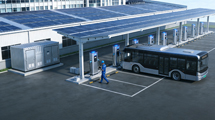



Vigorously develop safe and efficient energy storage technologies and give full play to the bidirectional regulation function of energy storage systems.
The timely achievement of the carbon peaking and carbon neutrality goals represents a major strategic decision made by the Party Central Committee with Comrade Xi Jinping at its core. General Secretary Xi Jinping emphasized: “We must unswervingly apply the new development philosophy, uphold a systems thinking, properly handle the relationships between development and emissions reduction, between the whole and the parts, and between short-term and medium-to-long-term goals. Guided by the comprehensive green transition of economic and social development and focusing on the green and low-carbon development of energy, we will accelerate the formation of an industrial structure, production mode, way of life and spatial pattern that conserve resources and protect the environment, and unswervingly pursue a path of high-quality development prioritizing ecological conservation and green low-carbon growth.” The Party Leadership Group of the National Energy Administration will fully implement the spirit of General Secretary Xi Jinping’s important speeches, thoroughly apply the new energy security strategy, stay committed to the main battlefield, act as a main force, seize the initiative, resolutely implement all policy decisions, comprehensively advance the green and low-carbon development of energy, and ensure the accomplishment of all targets and tasks on schedule.
Maintaining Strategic Resolve
China’s commitment to strive to peak carbon dioxide emissions before 2030 and achieve carbon neutrality before 2060 is a major strategic decision made by the Party Central Committee with Comrade Xi Jinping at its core after thorough consideration. It bears on the sustainable development of the Chinese nation and the building of a community with a shared future for mankind, and fully demonstrates the deep concern and proactive commitment of a responsible major country for the future of humanity and nature. As the world’s largest energy producer and consumer, delivering the carbon peaking and carbon neutrality goals on time is an arduous battle and a major test. We must boost confidence, maintain strategic resolve, and make solid ideological and operational preparations for a long-duration campaign.
Strategic measures to accelerate the comprehensive green transition of economic and social development.
The socialist modernization we pursue bears distinct Chinese characteristics. One of them is that our modernization features harmony between humanity and nature, with parallel advancement of material and ecological civilization. The energy sector boasts large scale, strong correlation and wide-ranging impacts. Carbon emissions from energy activities account for a high proportion of China’s total carbon emissions. Energy development links material civilization on one hand and ecological civilization on the other. The comprehensive green transition of economic and social development must get through the energy transformation. As the world’s largest developing country, development remains our top priority. The arduous tasks of advancing industrialization and urbanization and improving people’s livelihood determine that rigid demand for energy consumption growth will persist for some time to come. To meet this demand with high quality, we must fully, accurately and comprehensively implement the new development philosophy, take the adjustment of energy mix as the top priority, accelerate the transformation of the sector’s development model, greatly improve the quality of energy supply, firmly avoid the old path of high energy consumption and high carbon emissions trodden by developed countries, effectively underpin high-quality development with relatively low energy consumption and carbon emissions, support systemic economic and social transformation through profound changes in the energy sector, and facilitate the comprehensive green transition of economic and social development.
An inherent requirement for further advancing the energy revolution.
Since the 18th National Congress of the Communist Party of China, guided by the new energy security strategy, China has achieved rapid progress in energy mix adjustment. By the end of the 13th Five-Year Plan period, coal consumption accounted for 56.8% of total energy consumption, a historic drop; the share of non-fossil energy consumption rose to 15.9%; and the installed capacity of non-fossil power generation reached 980 million kilowatts, ranking first worldwide. These achievements have made important contributions to ecological civilization and laid a solid foundation for carbon peaking and carbon neutrality. Nevertheless, China features large-scale energy production and consumption and a high proportion of fossil energy such as coal, and energy development faces rigid constraints from resources and the environment. After basically bringing emissions of soot, sulfur dioxide, nitrogen oxides and other pollutants under control, further cutting carbon emissions and enhancing the vitality of sustainable development has become an inevitable path for high-quality development of the energy sector. To firmly stay on this path, we must plan energy undertakings from the perspective of harmony between humanity and nature, better balance industrial development and ecological protection, establish a clear orientation toward green and low-carbon growth, unswervingly push forward energy transformation, better fulfill the two major tasks of safeguarding energy security and advancing green low-carbon development, and strive to achieve a new historic leap in China’s energy revolution.
A proactive choice to jointly address climate change.
With accelerated green development, developing clean energy and cutting carbon emissions have become a global consensus. More than 120 countries have set targets for greenhouse gas net-zero emissions or carbon neutrality. In recent years, however, unilateralism and protectionism have gained ground in some countries with a strong tendency of self-interest. In particular, the COVID-19 pandemic has triggered a global economic downturn and restricted international exchanges, further aggravating deglobalization. Progress in honoring commitments has fallen short of expectations, bringing more destabilizing and uncertain factors to climate action. Faced with these risks and challenges, all countries must step up to their responsibilities and work hand in hand. By playing the positive role of a responsible major country, demonstrating a proactive attitude toward climate change and comprehensively advancing green and low-carbon energy development, China helps boost global confidence and morale to overcome difficulties together, facilitates the effective implementation of the principles of common but differentiated responsibilities, equity and respective capabilities, helps seek the greatest common ground for joint climate action, and promotes joint protection of the Earth homeland by all nations.
Strengthening Scientific Planning
Achieving carbon peaking and carbon neutrality represents an extensive and profound systemic economic and social transformation covering all aspects of modernization. We must strengthen strategic thinking, broaden strategic horizons, conduct sound strategic design, and enhance the principled, systematic, forward-looking and innovative nature of our work.
Coordinating and handling three major relationships.
We will unswervingly apply the new development philosophy, uphold systems thinking, strengthen top-level design and coordination, and maintain scientific, reasonable and consistent work intensity. We will coordinate and properly handle the relationship between development and emissions reduction, push forward both tasks with equal vigor, better use reform and development measures to advance production, supply and carbon and pollution reduction in an integrated manner, guide emissions reduction through green and low-carbon development, drive industrial innovation via emissions constraints, foster a mutually reinforcing positive cycle, turn challenges into opportunities, and unify the goals of development and emissions reduction under the requirements of safeguarding energy security and green low-carbon development. We will coordinate and properly handle the relationship between the whole and the parts, consider partial interests from the perspective of overall interests, take national top-level design as the fundamental guideline for implementing sectoral tasks, take accelerated green and low-carbon energy development as the key guarantee for carbon peaking and carbon neutrality, better play an exemplary role, strive to make more sectoral contributions, and unify partial and overall interests under the national master plan. We will coordinate and properly handle short-term and medium-to-long-term relationships, uphold the vision of making achievements for future generations rather than seeking quick success, and plan progress in a coordinated way. We must fully recognize the arduousness and complexity of energy transformation and persist in the long-duration campaign, while starting with pragmatic solutions to prominent current problems, focusing resources to win critical battles, accumulating small victories into major successes, and unify the timeline of short-term and medium-to-long-term tasks under the goal of “striving to peak carbon emissions before 2030 and achieve carbon neutrality before 2060”.
Clarifying the thinking for carbon peaking in the energy sector.
We will fully leverage China’s institutional advantage of pooling resources for major undertakings, strengthen strategic planning guidance, improve operational mechanisms, and steadily advance carbon peaking in the energy sector. We will set scientific strategic targets, closely aligning with national nationally determined contributions including cutting carbon dioxide emissions per unit of GDP by over 65% by 2030 compared with 2005, lifting the share of non-fossil energy in primary energy consumption to around 25%, and raising the total installed capacity of wind and solar power to over 1.2 billion kilowatts. We will conduct in-depth demonstration and calculation of sectoral indicators such as energy carbon emissions, consumption and efficiency, take on tasks proactively, break down and implement them in detail, ensure targets are realistic and feasible, and establish sound and reasonable target guidance. We will clarify and focus on strategic priorities, adhere to energy conservation and emissions reduction, take supply-side structural reform as the main thread, promote coordinated efforts on both supply and demand sides, strictly control coal-fired power projects and coal consumption, accelerate the development of non-fossil energy such as wind and solar power, continuously expand the supply of green and low-carbon energy, drastically cut high-energy and high-carbon energy consumption, and promote effective task implementation through high-quality interaction between supply and demand. We will strengthen policy safeguards, formulate and release the implementation plan for energy carbon peaking as well as sub-sector measures covering power, coal, oil and gas, new energy, energy storage and policy systems in conjunction with the implementation of the 14th Five-Year Plan Outline, clarify general requirements, major targets and key tasks, and ensure consistent delivery of the blueprint.
Seizing the Critical Window Period
China is less than ten years away from carbon peaking, and the 14th Five-Year Plan period serves as a critical window of opportunity. Vigorous work during this period to fully implement energy carbon peaking tasks and achieve historic progress in key areas is of great significance for delivering the carbon peaking and carbon neutrality goals and opening a new chapter in ecological civilization.
Vigorously controlling fossil energy consumption.
We will adhere to the priority strategy of energy conservation, strictly implement the dual control system of total energy consumption and intensity, continuously improve energy efficiency and carbon reduction levels, and form effective control over carbon emissions at the source. We will accelerate the reduction of coal use, strictly control coal-fired power projects, actively promote coal reduction and limitation in major coal-consuming sectors including iron and steel, building materials and chemical industry, and drastically cut scattered coal consumption. We will reasonably control the growth rate of oil consumption, scientifically optimize the structure of natural gas consumption, fully implement green oil and gas production initiatives, vigorously advance carbon reduction and efficiency improvement in oil and gas transportation, actively promote the transformation and upgrading of oil and gas processing, and further conduct research and application of carbon capture technologies. We will ensure that the average annual growth rate of fossil energy consumption during the 14th Five-Year Plan period is further reduced compared with the 13th Five-Year Plan, and fulfill the target of a 13.5% cumulative reduction in energy consumption per unit of GDP.
Accelerating the Renewable Energy Replacement Initiative.
We will adhere to the strategy of sustainable development, vigorously push forward the iterative development of non-fossil energy, steadily raise the intensity and pace of replacement, and further consolidate green and low-carbon development. We will accelerate the development of wind and photovoltaic industries, prioritize local development and consumption of wind and solar power in eastern, central and southern regions, actively promote the cluster development of offshore wind power in southeast coastal areas and base development of wind and solar power in the Three-North region. Wind and photovoltaic power will become the main driver of clean energy growth during the 14th Five-Year Plan period. We will actively and prudently develop hydropower and nuclear power, launch a number of major projects, and give full play to their strategic role. We will strengthen innovation and application of green and low-carbon technologies, actively develop safe and efficient energy storage technologies, steadily advance the development and large-scale application of hydrogen energy technologies, and promote the construction of smart grids. We will develop biomass, geothermal and other renewable energy sources in light of local conditions.
Actively building a new-type power system dominated by new energy.
We will adhere to the innovation-driven development strategy, strengthen technical and policy support, and accelerate the evolution of the power system to adapt to large-scale and high-penetration new energy. We will greatly enhance the flexible regulation capacity of the power system, step up the construction of peak-shaving power stations such as pumped hydro storage and gas-fired power plants, push forward flexibility retrofitting of coal-fired power units, and optimize grid dispatching and operation modes. We will strengthen power grid construction, optimize the national power grid layout, improve regional main power grids, carry out intelligent upgrading and renovation of distribution networks, and encourage users to invest in smart microgrids mainly for new energy consumption. We will advance coordinated development of generation-grid-load-storage, promote multi-energy complementarity such as wind-solar complementation and hydro-wind complementation, realize coordinated synchronization between new energy power stations and power grids, and give full play to the bidirectional regulation function of energy storage systems. We will deepen power system reform, improve electricity pricing and power dispatching and trading mechanisms, strengthen the construction of power auxiliary service markets, advance market-based power trading, and continuously improve supporting mechanisms and market models adapted to the operation of the new-type power system.