




Battery Pack at ¥0.5/Wh! China Tower & China Telecom’s 2.09GWh Lithium Battery Procurement Tender Opened (with 2020 Summary)
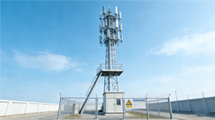
Battery Pack at ¥0.5/Wh! China Tower & China Telecom’s 2.09GWh Lithium Battery Procurement Tender Opened (with 2020 Summary) (Figure 1)
The First 2021 Lithium Battery Tender for Base Stations
Price Breaks the ¥0.5/Wh Mark
According to Polaris Energy Storage Network, the joint centralized tender of lithium iron phosphate battery products for backup power by China Tower and China Telecom covers 12 specifications of lithium iron phosphate batteries and attracted 34 bidders. The bid evaluation results show that eight enterprises, namely Liso Power, Narada Power, ZTT, Shuangdeng Group, Yipeng Energy, Lidong Power, Topband and Leoch New Energy, were shortlisted as bid candidates. In accordance with tender document requirements and ranking, five enterprises — Liso Power, Narada Power, ZTT, Shuangdeng Group and Yipeng Energy — became the final winners. Their respective winning shares are approximately 849.5 MWh for Liso Power, 591.5 MWh for Narada Power, 349 MWh for ZTT, 200 MWh for Shuangdeng Group and 100 MWh for Yipeng Energy.
Among the quotations submitted by the bid candidates, the average price of battery packs stood at approximately ¥0.453/Wh (ex-tax) and ¥0.513/Wh (tax-inclusive). The average quotation of the five winning enterprises was ¥0.445/Wh (ex-tax) and ¥0.504/Wh (tax-inclusive). Leoch New Energy offered the lowest quotation, while the tax-inclusive quotations of Liso Power and Shuangdeng Group were both below ¥0.5/Wh. This marked the first time that the price of lithium iron phosphate batteries fell below ¥0.5/Wh. Based on the above calculation, the total winning amount for battery packs alone from the five winning bidders in this procurement exceeded 916 million yuan.
In 2020, driven by China’s push for new infrastructure such as 5G base stations and data centers, together with the wave of replacing lead-acid batteries with lithium batteries at China Tower, market demand for lithium batteries for communication base stations surged sharply. According to incomplete statistics from Polaris Energy Storage Network, China Tower released 55 lithium battery procurement tenders across 19 provinces in 2020, with the estimated procurement scale and total budget exceeding 940 million yuan. The Yunnan 2020 lithium iron phosphate battery pack procurement tender issued at the end of December 2020 recorded the lowest lithium battery price of 2020, with a price cap of ¥0.604/Wh. In addition, the lowest price for standby second-life lithium batteries reached ¥0.664/Wh. By contrast, both the lowest bid price and average price in this 2021 tender directly broke the ¥0.5/Wh threshold. (See the table at the end for China Tower’s lithium battery tender winning results.)
Building New Application Scenarios
Promising Prospects for the Future Base Station Energy Storage Market
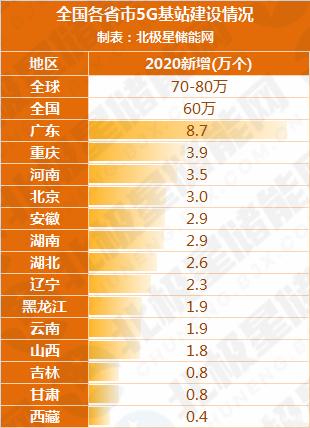
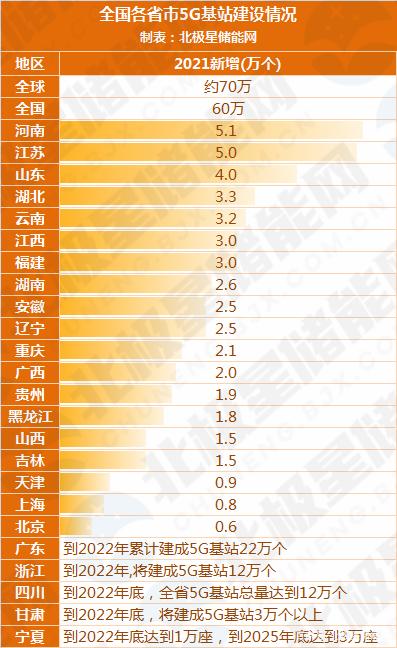
Previous comments pointed out that judging from the deployment cycle of 4G, the period from 2021 to 2023 was projected to witness the peak of 5G base station construction. According to MIIT data, China built approximately 580,000 new 5G base stations in 2020, and the planned construction volume for 2021 stood at 600,000 units. Newly-added base stations will generate demand for backup lithium batteries. Some data estimates that the demand for communication lithium batteries will reach 8 GWh in 2021.
Battery Pack at ¥0.5/Wh! China Tower & China Telecom’s 2.09GWh Lithium Battery Procurement Tender Opened (with 2020 Summary) (Figure 2) Battery Pack at ¥0.5/Wh! China Tower & China Telecom’s 2.09GWh Lithium Battery Procurement Tender Opened (with 2020 Summary) (Figure 3)
Moreover, according to the 2021 government work reports and other planning documents of multiple provinces, besides expanding the scale of 5G base station construction, many regions proposed to explore new application scenarios for base stations and promote integrated application of 5G base stations in other sectors. Recently, State Grid Zhejiang Comprehensive Energy Service Co., Ltd. and China Tower have ushered in a new era for base station energy storage application scenarios.
On February 8, State Grid Zhejiang Comprehensive Energy Service Co., Ltd. and Zhejiang Branch of China Tower Corporation Limited pioneered China’s provincial-level energy trusteeship cooperation for 5G base stations in the communications industry by signing the country’s first provincial base station energy trusteeship project in the communications sector.
Under the agreement, State Grid Zhejiang Comprehensive Energy Service will convert existing base stations with transferred power supply to direct power supply and provide big data energy consumption analysis services for base stations. Based on Zhejiang’s target of building 120,000 5G base stations by the end of 2022, the power consumption of China Tower’s base stations in Zhejiang will reach 2.49 billion kWh. It is estimated that around 960 million yuan of electricity and management costs can be saved cumulatively in the future.
Notably, in this cooperation, State Grid Zhejiang Comprehensive Energy Service will also aggregate backup batteries of 5G base stations to participate in power demand response. This means that in addition to backup power and peak shaving & valley filling for electricity cost reduction, base station energy storage equipment will embrace new application scenarios, further boosting the economic benefits of base station energy storage. Referring to Zhejiang’s 2020 power demand response policy, large-load users and load aggregators such as energy storage facilities are encouraged to take part in power demand response. The maximum subsidy for day-ahead peak shaving demand response is 4 yuan/kWh; a fixed subsidy of 1.2 yuan/kWh is available for day-ahead valley filling demand response, and a fixed subsidy of 4 yuan/kWh for real-time demand response. In addition, State Grid Zhejiang Comprehensive Energy Service stated that it will organize power market transactions for 5G base stations. By purchasing low-cost green electricity from other provinces, it will help base stations achieve carbon neutrality targets.

At the very beginning of 2021, base station energy storage brought such a pleasant surprise. Standing at the forefront of further promoting the application of energy storage technology, the future of energy storage is even more worth looking forward to.