




Xi Jinping’s “China Commitment”:Energy Storage Is Bound to Usher in Significant Development in the Next Decade
The final word: China has renewed its commitment to the world to further cut carbon dioxide emissions in response to climate change.
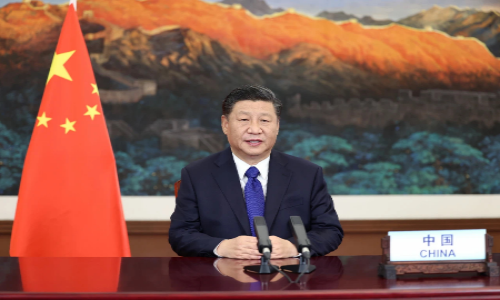
On December 12, President Xi Jinping delivered a video speech at the Climate Ambition Summit. He announced that by 2030, China’s carbon dioxide emissions per unit of GDP will drop by over 65% from the 2005 level, the share of non-fossil energy in primary energy consumption will reach around 25%, forest stock volume will increase by 6 billion cubic meters compared with 2005, and the total installed capacity of wind and solar power will exceed 1.2 billion kilowatts.
Earlier on September 22, Xi Jinping addressed the general debate of the 75th Session of the United Nations General Assembly. Referring to the Paris Agreement on climate change, he stated that China will increase its nationally determined contributions and adopt more vigorous policies and measures. China will strive to peak carbon dioxide emissions before 2030 and achieve carbon neutrality before 2060.
Energy transition is critical for carbon emission reduction. The proposal of the “30·60” targets has set a clear timetable for the energy revolution. The specific installed capacity targets for wind and solar power established on this occasion define the boundaries and framework for China’s subsequent new energy policy formulation and further remove obstacles.
1. Energy Storage Is Indispensable Against the Backdrop of a High Proportion of Renewable Energy
According to data from the National New Energy Consumption Monitoring and Early Warning Center, by the end of September, China’s grid-connected installed capacity of wind power and photovoltaic power each reached 220 GW, totaling 440 GW. There remains an installed capacity gap of nearly 750 GW to meet the minimum cumulative target of 1,200 GW for wind and solar power by 2030. Averaged over 10 years, this implies annual new installed capacity of wind and solar power shall be no less than 75 GW.
It should be emphasized that 75 GW is only the baseline figure. According to practitioners in the photovoltaic and wind power sectors, the actual installed capacity may be much higher.
At this year’s Wind Energy Conference, the wind power industry projected that China must maintain annual new wind power installed capacity of over 50 GW during the 14th Five-Year Plan period, and the annual new installed capacity should be no less than 60 GW after 2025. The installed capacity will reach at least 800 GW by 2030 and 3,000 GW by 2060.
The photovoltaic industry has also made forecasts. For the 14th Five-Year Plan period, the general estimate puts China’s annual new PV installed capacity at around 70 GW, while optimistic forecasts raise this figure to 90 GW.
Undoubtedly, whether based on optimistic or conservative estimates, with the advent of the grid parity era, new energy dominated by wind and solar power is bound to enter a phase of vigorous development.
Energy storage is indispensable for power grids to accommodate such large-scale new energy. Huang Shilin, Vice Chairman of CATL and Chairman of New Star Times, recently stated that to achieve carbon peaking before 2030, the installed capacity of clean energy must exceed that of traditional thermal power. Calculated starting from 2021, the annual installed capacity of wind and solar power must exceed 100 GW. If configured at a 15% capacity ratio, approximately 15 GW of new energy storage capacity will be required each year. With a standard 2-hour duration, 30 GWh of electrochemical storage batteries will be needed annually.
2. Energy Storage, Renewable Energy, and New Energy Vehicles Are Mutually Reinforcing and Interdependent
Over the past decade, the prices of both energy storage batteries and PCS have dropped by more than 90%. Objectively speaking, the previous robust growth of China’s electric vehicle and photovoltaic industries has laid a solid foundation for the rise of the energy storage sector.
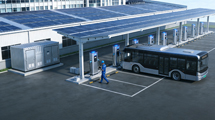
At the same time, as technologies mature, energy storage is stepping onto the front stage to support the large-scale development of new energy vehicles and renewable energy. On one hand, with the advent of fast-charging technology, each charging pile for electric vehicles delivers roughly 250 to 300 kilowatts of power. If charging stations spread nationwide like gas stations in the future, energy storage will be required to expand the capacity of charging stations and reduce grid demand during peak electricity consumption periods. The integrated energy storage and charging market will open up a brand-new landscape for enterprises along the energy storage industrial chain.
On the other hand, renewable energy represented by photovoltaics has inherent drawbacks that can only be compensated through acquired solutions. Its natural volatility and intermittency pose huge challenges to power grids. To become a major source of energy, it has to rely on efficient and low-cost energy storage technologies.
In addition, the world is undergoing profound changes unseen in a century. In particular, the integration of the energy revolution and transportation revolution will bring earth-shaking transformations to the traditional energy and automotive industries. Carbon reduction takes place not only between energy storage and renewable energy, but also between renewable energy and new energy vehicles.
New energy vehicles and renewable energy form two interdependent pillars of energy supply and consumption. Under China’s power structure dominated by thermal power, new energy vehicles achieve only marginal improvement in emission reduction compared with fuel vehicles. However, in a power system mainly powered by renewable energy, the emission reduction effect of new energy vehicles becomes highly remarkable.
In recent years, wind and solar curtailment has occurred repeatedly. Due to the strong volatility of wind and solar power generation, the power grid struggles to absorb such power. Nevertheless, the application of new energy vehicles enables local generation and consumption of part of wind and solar power. Furthermore, acting as mobile power banks, new energy vehicles can serve as energy storage batteries for wind and solar power and participate in grid dispatching.
Therefore, the growth of installed wind and solar power capacity also facilitates the development of new energy vehicles, and the development of new energy vehicles in turn boosts the growth of wind and solar power generation.
3. It Is Time to Carry Out Top-Level Design for the Energy Storage Industry
I will provide a professional, fluent, and consistent financial-style English translation in full accordance with your article tone.
This marks a special phase for the industry, as the long-awaited top-level design for the sector has yet to be released. At present, excluding pumped hydro storage, the development of new electrochemical energy storage has not been incorporated into the national energy planning system, leaving the industry without guidance from top-level policy design.
The domestic energy storage sector experienced a “tale of ice and fire” in 2020. On one hand, energy storage deployment on the new energy side boomed, driving a market recovery. On the other hand, energy storage was reduced to a zero-sum game between power grid operators and power generation groups, with no viable commercial models taking shape.
Beyond smoothing the grid integration of renewable energy, energy storage delivers multiple functions including peak shaving, frequency regulation, black start, and backup power support. If merely treated as a tool for new energy grid connection, the industry will be trapped in endless price competition and persistent safety risks, leaving the energy storage sector vulnerable to another downturn.
As an emerging industry, electrochemical energy storage involves a wide range of stakeholders. In the absence of high-level policy guidelines, one-sided judgments based solely on the perspectives of grid companies, power generators, or energy storage equipment manufacturers are inevitably incomplete and unfair.
For the entire power grid and power system, the role, value, and commercial models of energy storage as an emerging asset still require further clarification and institutional optimization by policymakers.
Industry insiders suggest actively promoting the inclusion of energy storage in relevant national 14th Five-Year Plan arrangements and medium- and long-term energy development strategies. Clarifying industrial development goals, key tasks, and implementation paths will provide scientific guidance for the sound and orderly development of the energy storage industry.