





New Energy Vehicle Fleet to Exceed 1.7 Million; Charging Piles Must Keep Pace
Source: Qianzhan Industry Research Institute, Yang Fan
The new energy vehicle industry has risen to the height of China's national strategy, and achieving the long-cherished dream of becoming an automotive powerhouse through the development of new energy vehicles has become a consensus. With the collaborative efforts of all sectors of the industry, China's new energy vehicle industry has developed rapidly in recent years and achieved results that are obvious to all.
In terms of production and sales scale, China's new energy vehicles account for more than 50% of the global market. According to statistics from the Qianzhan Industry Research Institute, from January to November 2017, the production and sales of new energy vehicles reached 639,000 and 609,000 units respectively, up 49.7% and 51.4% year-on-year. Conservatively estimated, China's new energy vehicle production and sales this year will reach about 700,000 units, and by the end of 2017, the fleet will exceed about 1.7 million units.
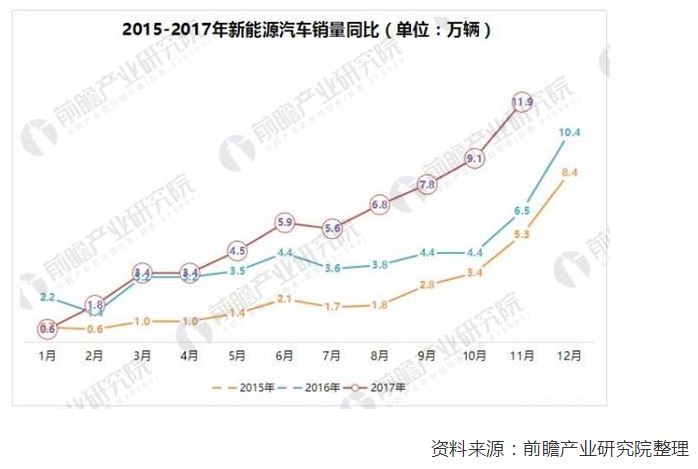
However, while seeing the achievements of the new energy vehicle industry, we should also see the shortcomings in its development—from the perspective of the entire industrial chain, China's new energy vehicle industry has made tremendous progress in the front end and middle end, but this cannot conceal the reality that its back end lags behind.
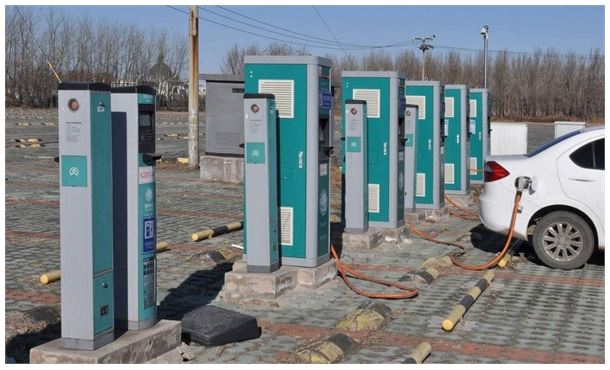
In the field of charging infrastructure, China has currently built about 180,000 public charging piles. Including private charging piles, the total vehicle-to-pile ratio is about 4:1, which is far from meeting the normal charging needs of new energy vehicles. Against the backdrop of rapid advances in the front end and middle end of the industry, the bottleneck constraint of a lagging back end is becoming increasingly prominent.
According to data from the "Charging Pile Industry Prospect Forecast and Investment Analysis Report" released by Qianzhan Industry Research Institute, although the number of charging piles is increasing rapidly, what cannot be ignored is that the growth scale of new energy vehicles is still significantly higher than the growth scale of charging piles, which means the gap between vehicles and piles is still continuously expanding. Taking the statistical data for 2015 and 2016 as an example, the number of public charging piles increased by 100,000, but the number of new energy vehicles in use increased by more than 170,000, still failing to achieve synchronized 1:1 growth and also increasing the gap by 70,000.
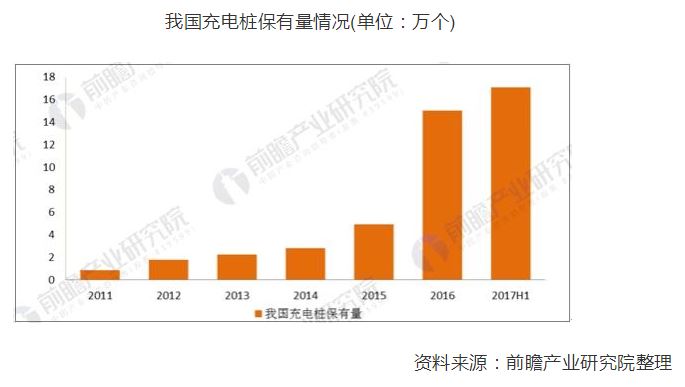
It can be seen that charging piles urgently need to keep pace. The National Energy Administration issued the guiding document for charging infrastructure construction, the "Guidelines for the Development of Electric Vehicle Charging Infrastructure (2015-2020)," which proposed phased, categorized, and regional planning and construction targets for charging facilities from 2015 to 2020. Among them, it emphasized that by 2020, more than 12,000 centralized charging and battery swapping stations and more than 4.8 million distributed charging piles should be added to meet the charging needs of 5 million new energy vehicles.
If the new energy vehicle industry is to have a future, it must achieve coordinated advancement across the entire industrial chain, must achieve coordinated advancement of public charging and private charging, must achieve coordinated advancement of urban areas and suburbs, and must achieve coordinated advancement of charging technology and charging services. Only by fulfilling these four requirements will it avoid losing consumer trust on a large scale after the large-scale withdrawal of policies in 2020; otherwise, it will completely lose the future!