




How Can Charging Piles "Feed" 80 Million Electric Vehicles in 2030?
Source: Science and Technology Daily, Liu Yin
Two years ago, only 20,000 people in Beijing bought electric vehicles. This year, more than 120,000 people are queuing for new energy vehicle license plates. Based on the 2018 Beijing new energy passenger vehicle quota of 60,000, it may not be until 2019 that some of those waiting in line can drive home their desired new energy vehicle.
The rapid development of new energy vehicles can be seen from this. According to the forecast of the energy-saving and new energy technology roadmap of the Society of Automotive Engineers of China, by 2025, China's new energy vehicle production and sales will be about 8 million units; by 2030, China's new energy vehicle production and sales will reach 40% of total vehicle volume, that is, about 15 million units.
With the development of technology and the increasing improvement of related infrastructure, new energy vehicles will win the favor of more consumers. But how can new energy vehicles, while climbing over obstacles, accelerate forward? On December 24, Shen Chengpeng, Director of the Information Department of the China EV100, told Science and Technology Daily reporters that the industry consensus is that further breakthroughs must be made in power batteries and charging/swapping facilities. As is well known, whether charging infrastructure can provide convenient and fast charging or battery swapping services has always been an important factor in whether users are willing to buy electric vehicles.
With the continued rapid development of electric vehicles, can the construction of charging piles and services keep up? Can the model of "building piles wherever there are vehicles" meet the demand for large-scale growth of new energy vehicles in the future?
Development Heats Up, but Charging Facilities Lack Sustained Momentum
China has become the country with the largest number of electric vehicles and the largest number of public charging piles built and put into operation in the world. From January to October, the production and sales of electric vehicles were 517,000 and 490,000 respectively, up 45.7% and 45.4% year-on-year.
At the recent 2017 Second China Electric Vehicle Charging and Battery Swapping Service Innovation Summit Forum, Guo Wei, Deputy Inspector of the National Energy Administration, said that the construction of charging infrastructure in China has been fully rolled out, and continuous innovation in charging technology has met the charging needs of electric vehicles, but there are still problems of an unstable foundation and insufficient development momentum.
"On the basis of conventional AC slow charging and DC fast charging, technical routes such as AC fast charging, high-speed battery swapping, wireless charging, and DC ultra-high-power charging have further formed, and new technologies such as flexible charging, matrix charging stacks, and intelligent charging and discharging have also emerged." Guo Wei said bluntly that insufficient development momentum in charging infrastructure is manifested in common problems such as lack of interconnection, low utilization rates, and safety hazards. Because there are many vehicle and pile manufacturers, incompatibility of vehicle and pile charging interfaces, especially DC interfaces, still exists, and the level of interconnection between operator platforms is relatively low.
As of October, a total of 195,000 public charging piles had been built nationwide, an increase of 82.2% over the same period last year; and 188,000 private charging piles, an increase of 214% over last year. This figure is still some distance from China's proposed target of adding 4.8 million charging piles by 2020.
It is worth noting that the average utilization rate of public charging piles is less than 15%. "The number of new energy vehicles in use is relatively small, and most users have their own charging piles," Guo Wei said. The profitability of the charging industry is relatively low, and the business model still needs further exploration. Due to unreasonable layout and inadequate maintenance, there are also many faulty piles and zombie piles in some areas. In addition, safety standards for charging interfaces still need to be improved, and institutional and mechanical obstacles to the installation of private charging piles still remain.
Switching Tracks to Build an Intelligent Charging and Battery Swapping Network
Regarding the troubles brought by the existing charging model, Zhang Yong, Deputy General Manager of BAIC BJEV, has deep personal experience. At present, in the promotion of electric taxis and ride-hailing vehicles, the problem faced is that drivers are very dissatisfied with charging time. The fastest fast charging still takes more than 40 minutes, and the construction of existing charging facilities still needs improvement, so charging is indeed still not very convenient.
By 2030, China's electric vehicle fleet will reach 80 million units. Can existing charging services meet user demand? Yu Dexiang, Chairman of Qingdao TGOOD Electric Co., Ltd., said that the daily charging and battery swapping of 80 million electric vehicles will exceed 3 billion kWh, accounting for about 50% of residential electricity consumption. In addition, many charging piles at present have not undergone industrial product design, and their lifespan is at most three years. After three years, the failure rate will increase significantly, leading to a worse user experience.
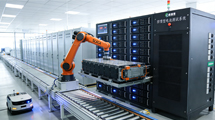
"We have proposed a battery swapping model. It only takes 2 minutes and 46 seconds to swap out the battery. We have now carried out a series of operational practices and explorations of battery swapping stations in Beijing, Guangzhou, Xiamen, Lanzhou, Tianjin, and other places, but there are also some problems in the operation of battery swapping stations," Zhang Yong said.
"The construction of charging piles must be oriented toward 2020 to 2030. We need to build an automobile charging and battery swapping network, not individual charging piles," Yu Dexiang said. The difference between the two lies in the fact that a charging and battery swapping network is a controllable, intelligent, and environmentally friendly system that provides the foundation for orderly charging and orderly "selling electricity" in the future.
Facing exponentially growing electric vehicles, when the number of charging piles reaches the level of hundreds of millions, millions of professional maintenance workers will be needed to repair the charging piles. How will charging operators support the high labor costs?
"At present, the profitability of charging facility suppliers is still relatively weak. It is necessary to promote the formation of a sustainable corporate operation model through innovation. It is necessary to support the development of crowdfunded charging pile construction, make full use of social resources to participate in the construction of charging infrastructure, encourage charging service enterprises to carry out commercial cooperation with vehicle enterprises, and achieve coordinated development of vehicles and piles..." Guo Wei suggested that, on the one hand, it is necessary to accelerate the research and development of advanced charging technology, and on the other hand, it is necessary to support innovative charging and battery swapping business models, and strengthen the grid connection and interconnection of public piles and private piles. After vehicles and piles are connected to the network, sharing can be achieved, the proportion of pile construction, network construction, and station construction can be reduced, and efficiency can be improved.
The Future Is Promising: They Can "Breathe In and Out" Energy and Serve as Mobile Terminals
Obviously, solving the charging problem cannot be separated from the participation of multiple parties such as the government, the industry, vehicle manufacturers, and operators. Open sharing, interconnection, and intelligence and convenience are not only good remedies for solving the "range anxiety" of electric vehicles and enhancing consumer confidence, but also the general trend for the development of new energy vehicles.
Liu Baohua, Deputy Director of the National Energy Administration, believes that in the future, in addition to being a means of transportation, new energy vehicles can also be mobile terminals for personal computers, mobile offices, and so on. "New energy vehicles are a major platform for new technology integration after mobile phones."
In the view of Chen Qingtai, Chairman of the China EV100, vehicle-mounted batteries in a smart grid are both mobile micro-power sources and mobile micro-energy storage stations, and Tesla has already become a model in this regard. Most electric vehicles, especially private cars, are parked more than 95% of the time. At such times, vehicle-mounted batteries can be connected to an interactive power grid, storing electricity when electricity prices are low and generating electricity when prices are high, from which revenue from the electricity price difference can also be obtained.
In fact, electric vehicles not only shoulder the important task of being energy reserve terminals, but are also the best choice for becoming intelligent connected mobile terminals.
"When users buy our cars, we must achieve this goal: recharging should be more convenient than refueling. We will connect exclusive charging piles, battery swapping stations, charging vehicles, and public piles through the entire cloud, and the system will intelligently determine when and where you need to charge," said Shen Fei, Vice President of NIO. Relying on cloud computing and artificial intelligence, at present, real-time navigation data can be used to determine the service radius of charging and battery swapping stations, thereby determining site selection. In the future, it will provide users with a comprehensive and better electric vehicle experience, including vehicle use, recharging, entertainment, information, and even shopping.
The vision is beautiful, and the future has already arrived. With the innovative application of new-generation information technologies such as artificial intelligence, 5G communications, augmented reality, big data, and cloud computing, cars in the traditional sense will possess powerful perception, communication, computing, and decision-making capabilities, truly making them mobile intelligent terminals.