






Heavyweight Document Issued by the General Office of the CPC Central Committee and the General Office of the State Council! Energy Storage Moves Toward the Core of the "New-Type Power System"
Digital Energy Storage Network News: On April 22, the "Opinions on Doing a Better Job in Energy Conservation and Carbon Reduction at a Higher Level and with Higher Quality" was publicly released by the General Office of the CPC Central Committee and the General Office of the State Council. The opinions point out at the outset that energy conservation and carbon reduction are an important lever for advancing carbon peak and carbon neutrality and accelerating the green transformation of development methods, and are an important support for safeguarding national energy security and promoting industrial quality improvement and upgrading.
The opinions require reasonably controlling the installed capacity scale and power generation of coal power, vigorously developing non-fossil energy and new-type energy storage, accelerating the construction of a new-type power system, scientifically laying out pumped storage, innovatively developing business forms such as green electricity direct connection and smart microgrids, promoting the consumption of green electricity, and promoting the gradual coverage of new clean energy power generation over the new electricity demand of the whole society.
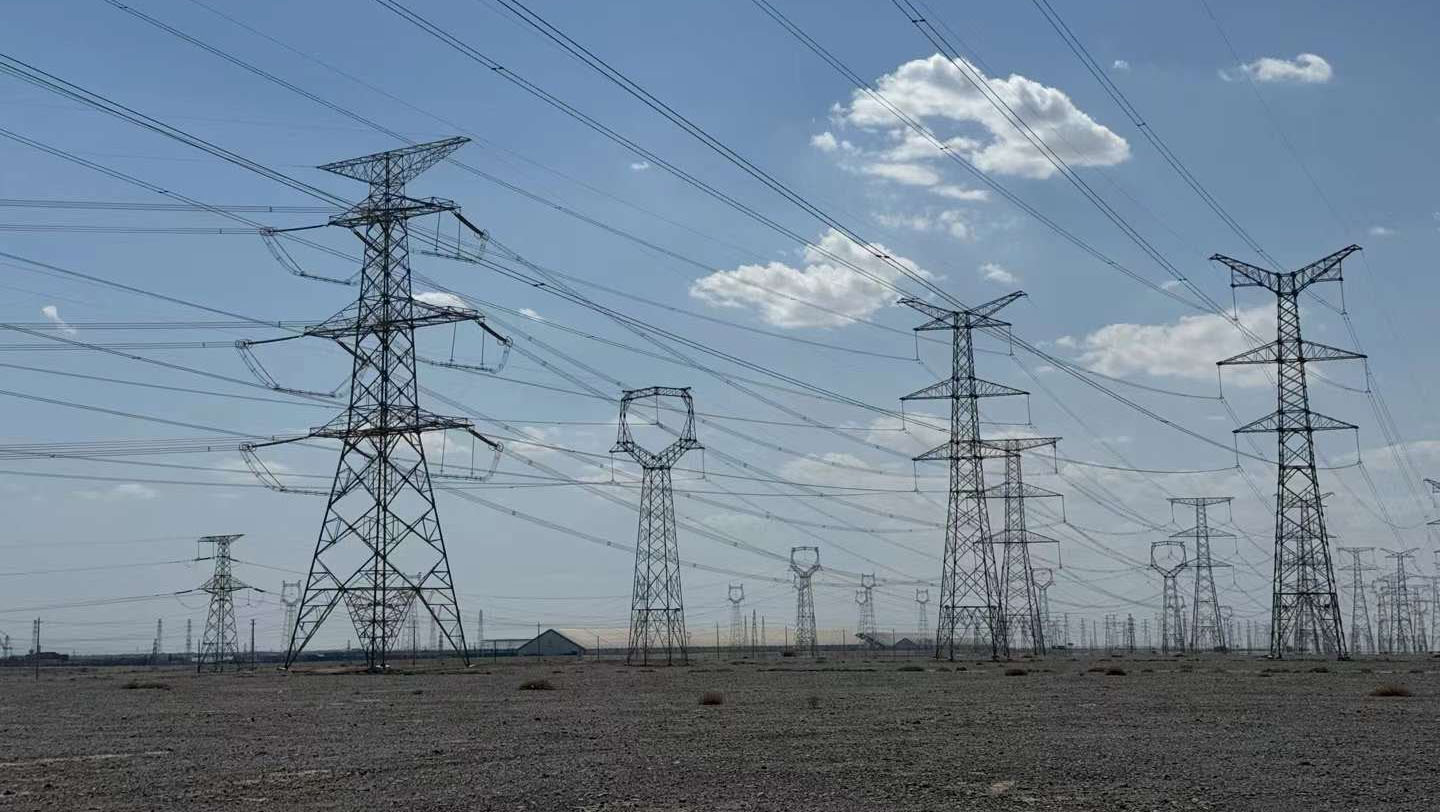
Improve energy production efficiency, promote high-efficiency fossil energy extraction technology and equipment, strengthen energy-saving and carbon-reduction renovation and flexibility renovation of coal power, reasonably determine the dispatch order and peak-shaving depth of coal power, continuously improve the efficiency of wind and solar power generation and the energy conversion efficiency of energy storage devices, and steadily reduce the comprehensive line loss rate of the power grid.
Energy System Reconstruction Enters the "System Era"
Just two days earlier, on April 20, the State Council conducted its 19th special study session around "coordinating energy security and green and low-carbon transformation, and accelerating the construction of a new-type energy system." Premier Li Qiang mentioned energy security, new-type power grids, and energy storage system construction many times in his speech.
Premier Li Qiang explicitly proposed increasing investment in fields such as energy storage, charging facilities, and new-type power grids, and emphasized using artificial intelligence to promote the digital and intelligent transformation of power grids. This means that energy storage has been included in the category of core infrastructure of the national energy system.
The signals released by this high-level meeting mark that China's energy system is completing a deep shift—from the extensional expansion of "scale-driven" to the internal reconstruction of "system-driven."
Over the past few decades, the core contradiction of China's power system was "whether it is enough," so coal power expansion and power grid construction became the main line. However, at a time when the proportion of new energy installed capacity is rising rapidly, the problem has shifted to "whether it is stable" and "whether it can be flexibly adjusted." As wind power and photovoltaic power gradually become the main body of power sources, the operating logic of the power system has undergone a fundamental change—it is no longer a relatively stable linear system, but a complex system with high volatility, high coupling, and strong real-time performance.
In such a system, the role of energy storage is no longer simply a "peak-shaving tool" or a "supporting construction requirement," but has begun to assume the functions of a system stabilizer, regulator, and even an "invisible power source."
In other words, China is moving from "whether there is energy storage" to the stage of "how energy storage defines power grid capabilities." This change marks that the nature of the energy storage track has leaped from a "growth industry" to a "foundational capability."
Grid-Forming Energy Storage Completes "Identity Confirmation"
If the statements at the State Council level are directional, then a series of policies recently issued by the National Energy Administration have established the status of grid-forming energy storage.
On March 24, the "Guidelines for Project Approval of Energy Industry Standard Plans in 2026" issued by the National Energy Administration included grid-forming technology in the direction of power system safety and stability as a key focus in the standard system for the first time. This change is of milestone significance.
For a long time, grid-forming energy storage has remained more at the stage of technical discussion and demonstration projects. The industry has not formed a unified consensus on its definition, capability boundaries, and evaluation system. Under such circumstances, the concept of "grid-forming" in the market has been seriously generalized, different enterprises have greatly differing understandings of it, and there is also a lack of unified verification standards. This has not only restricted the implementation of the technology, but also affected the healthy development of the industry.
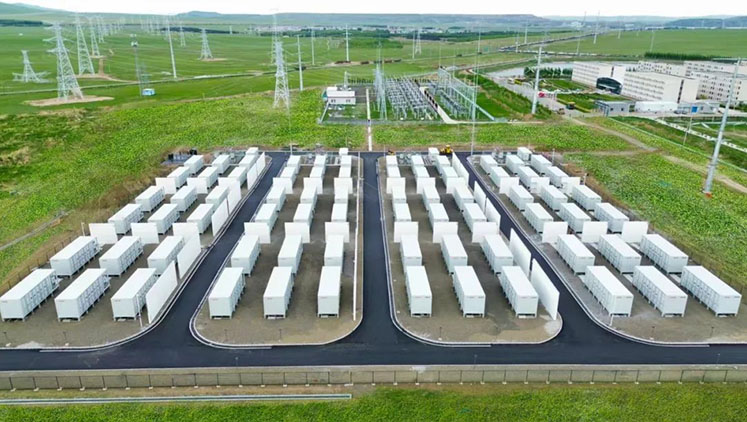
The significance of standard project approval lies in transforming technology from a "concept" into "rules." Once it enters the standard system, it means that grid-forming energy storage will have the foundational conditions for being verifiable, replicable, and scalable, and will also provide an institutional prerequisite for future participation in electricity market trading and value realization. More critically, two national standards for grid-forming converters are expected to be implemented in the second half of 2026, which will become an important watershed for the industry—from then on, there will be a clear boundary between "true grid-forming" and "fake grid-forming."
At the same time, policy intensity is also rapidly increasing. Since 2025, the National Energy Administration has continuously issued multiple documents, pushing grid-forming energy storage from "encouraged pilot" to "access threshold." Whether it is proposing a penetration rate target of more than 30% or explicitly specifying grid-forming capability requirements in new energy projects, both indicate a trend—grid-forming energy storage has changed from an optional item to a mandatory item.
Such a rapid pace of policy advancement is not common in the energy field. What it reflects behind it is that systemic risks are approaching, and institutional means must be used to respond in advance.
Why the Power Grid "Must Be Grid-Forming"
To understand why grid-forming energy storage has suddenly become a rigid demand, one must return to the most basic physical mechanism of the power system—rotational inertia. In traditional power systems, thermal power and hydropower units rely on large rotating machinery to provide natural inertia. When the system is disturbed, this inertia can automatically suppress frequency fluctuations, equivalent to a natural "stabilizer."
However, new energy represented by wind power and photovoltaic power is essentially connected to the grid through power electronic equipment and does not possess rotational inertia. As the proportion of new energy continues to rise, the "sources of inertia" in the power system are rapidly decreasing, which directly leads to a decline in system stability. Intensified frequency fluctuations, insufficient voltage support capability, and the risk of cascading failures under extreme conditions are all gradually emerging.
From the data perspective, this trend is already very clear. Data from the National Energy Administration shows that by the end of 2025, renewable energy accounted for more than 60% of installed power generation capacity, and cumulative installed wind and photovoltaic capacity exceeded 1.8 billion kilowatts, accounting for 47.3%, historically surpassing thermal power and becoming the main power source in the power system. This means that the traditional power grid structure that relies on synchronous machines to maintain stability is being replaced by a "weak-inertia system."
Against this background, the value of grid-forming energy storage has begun to stand out. Its core lies in using control algorithms to transform energy storage converters into "voltage sources," simulating the external characteristics of synchronous generators, thereby actively providing frequency, voltage, and inertia support. It no longer passively follows power grid operation, but can to a certain extent "define the operating state of the power grid."
This change is essentially a reconstruction of the stability mechanism of the power system—from relying on physical inertia to relying on "virtual inertia" constructed by power electronics and algorithms. Among all current technical paths, energy storage is the most feasible and also the solution with the greatest potential for scale.
From Equipment Competition to System Capability Competition
As grid-forming energy storage is incorporated into the policy system, its industrial logic is also changing. In the past, competition in the energy storage industry was mainly concentrated on battery cell costs, system integration efficiency, and project scale, essentially a kind of "manufacturing competition." But in the era of grid-forming energy storage, this competition is escalating into "system capability competition."
First, the lack of standards and verification systems means that the industry will still face relatively high uncertainty in the short term. Before unified standards are implemented, performance between different projects is difficult to compare horizontally, and acceptance relies more on case-by-case testing, which places higher demands on enterprises' engineering capabilities.
Second, engineering complexity has increased significantly. Grid-forming energy storage is not a simple stacking of equipment, but an engineering effort highly dependent on parameter tuning and system matching. Different power grid structures and different load characteristics will all affect control strategies. Once parameters are improperly set, they may even cause system oscillations. This means that project delivery has shifted from "equipment delivery" to "system delivery," and enterprises need stronger commissioning and operation and maintenance capabilities.
Third, there is the issue of global adaptation. As markets such as Europe put forward grid-forming capability requirements, Chinese enterprises are ushering in a window of opportunity for going overseas, but at the same time they also face challenges from different countries' power grid standards, certification systems, and operating environments. Single-product output is no longer enough to meet demand, and a transformation toward "overall solutions" is necessary.
Taken together, grid-forming energy storage is raising the industry threshold and also reshuffling the competitive landscape. Enterprises with true long-term competitiveness will no longer be merely cost leaders, but will be judged comprehensively on system capabilities, engineering experience, and technological accumulation.
From Regional Pilots to Global Diffusion
Under the combined effect of policy promotion and technological maturity, grid-forming energy storage will show a clear diffusion trend in the coming years. First, in terms of application scenarios, grid-forming energy storage projects are gradually extending from the initial northwest new energy bases to the whole country. Especially in areas with complex power grid structures and dense loads, where the demand for stability is more urgent, the application space for grid-forming energy storage will expand significantly.
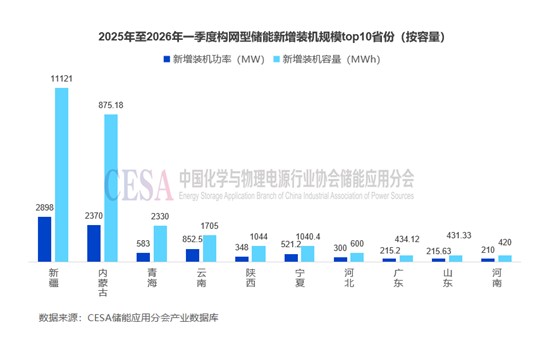
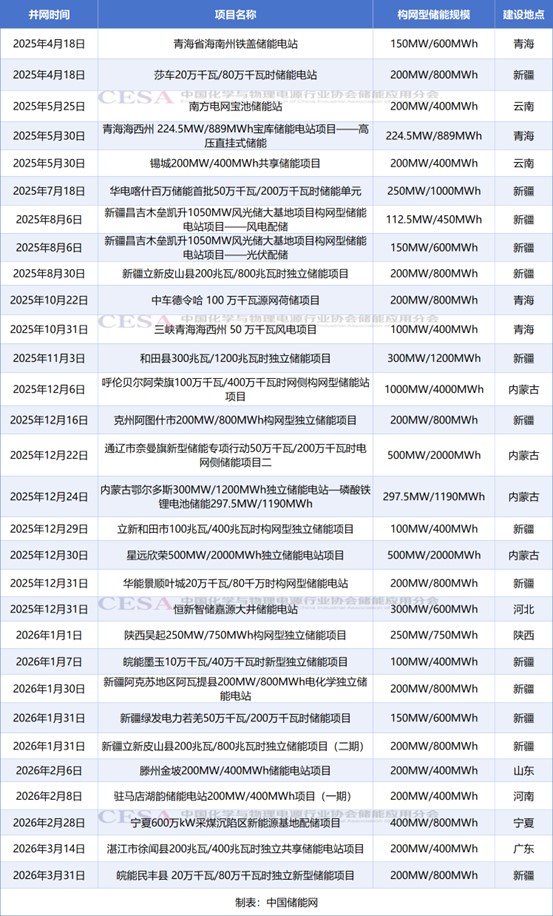
According to statistics from the industry database of the CESA Energy Storage Application Branch, from 2025 to the first quarter of 2026, a total of 87 grid-forming energy storage projects were newly added, with a total scale of 9.19GW/30.05GWh. In terms of construction locations, Xinjiang added 2.9GW/11.12GWh of grid-connected capacity, accounting for 37.01% of the capacity and ranking first nationwide. Inner Mongolia added 2.37GW/9.44GWh of grid-connected capacity, accounting for 31.42% of the capacity and ranking second. Qinghai added 0.58GW/2.33GWh of grid-connected capacity, accounting for 7.75% of the capacity and ranking third. Yunnan, Shaanxi, and Ningxia also saw newly added grid-connected scales reaching the GWh level, at 1.71GWh, 1.044GWh, and 1.04GWh, respectively. By application scenario, the grid side added 7.16GW/23.95GWh of grid-connected capacity, accounting for 79.7% of the capacity; the power source side added 1.83GW/5.73GWh of grid-connected capacity, accounting for 19.07% of the capacity; and the user side added 192.29MW/368.22MWh of grid-connected capacity, accounting for 1.23% of the capacity.
Table: Newly Added Installed Capacity of Grid-Forming Energy Storage Projects from 2025 to the First Quarter of 2026
Second, in terms of technology paths, a single energy storage technology is difficult to meet the needs of all scenarios, and the integration of multiple energy storage forms will become a trend. Electrochemical energy storage has fast response speed, but limited duration; compressed air and flywheel energy storage have advantages in power and lifespan. The synergy among different technologies will build more resilient system capabilities.
Finally, at the global market level, as overseas requirements for power grid stability increase, grid-forming energy storage is becoming a new "passport for going overseas." Chinese enterprises' first-mover advantages in this field give them the opportunity not only to participate in market competition, but also to occupy a place in the formulation of international standards, gradually transforming from "followers" to "rule participants."
Energy Storage Is Defining the Next Generation of Power Systems
If we look at this from a longer time horizon, the rise of grid-forming energy storage at present is essentially a reconstruction of the underlying logic of the power system. As new energy gradually becomes the main power source, the traditional stability mechanism relying on synchronous machines is already difficult to sustain, and new technical paths must be found to maintain system operation.
The signals released by the high-level State Council meeting on April 20 are essentially answering a longer-cycle question—when the energy system enters the era of a high proportion of new energy, what is truly "security"?
Grid-forming energy storage is precisely the key answer to this question. It not only solves the problem of "how to store electricity," but also answers a deeper question—namely, how to re-establish stability in a power grid dominated by power electronic equipment.
It can be foreseen that with the gradual implementation of national standards, the continuous improvement of the policy system, and the gradual maturity of market mechanisms, grid-forming energy storage will gradually transform from the current technological hotspot into a foundational capability in the power system. The future new-type power grid will no longer be merely a transmission and distribution channel, but a new-generation power system platform integrating algorithms, data, and power electronics.