




National Energy Administration: Explore the Construction of New-Type Integrated Hydro-Wind-Solar Bases with Pumped Storage, New-Type Energy Storage, etc. as Regulating Power Sources to Drive Large-Scale, High-Quality Development of Surrounding Wind and Solar Resources
China Energy Storage Network News: The National Energy Administration (NEA) recently issued the Guiding Opinions on Promoting the Integrated Development of New Energy. It states that by 2030, integrated development will become a major pathway for new energy growth. The reliable substitution capacity of new energy will be markedly enhanced, its market competitiveness significantly improved, strongly supporting the comprehensive green transition of economic and social development, and providing safer and more reliable green energy supply for accelerating the advancement of Chinese modernization.
Guiding Opinions on Promoting the Integrated Development of New Energy
Issued by the National Energy Administration, Document No. NEA New Energy〔2025〕93
Energy bureaus of all provinces (autonomous regions and municipalities directly under the Central Government), development and reform commissions of relevant provinces (autonomous regions, municipalities directly under the Central Government) and the Xinjiang Production and Construction Corps, all dispatched agencies, and relevant power enterprises:
Since the 14th Five-Year Plan period, guided by the strategic goals of carbon peaking and carbon neutrality, China’s new energy industry has achieved leapfrog development. The installed capacity of new energy has historically surpassed that of thermal power, marking a new stage of development. Meanwhile, as the scale and power proportion of new energy keep rising, the pressure on system consumption continues to mount, and it becomes increasingly difficult to guarantee land and other essential resources. There is an urgent need to transform the development, construction and operation modes of new energy and realize integrated development. The following opinions on promoting the integrated development of new energy are hereby put forward.
I. General Requirements
We will follow Xi Jinping Thought on Socialism with Chinese Characteristics for a New Era, fully implement the spirit of the 20th National Congress of the Communist Party of China and all plenary sessions of the 20th Central Committee, apply the new development philosophy in a complete, accurate and comprehensive manner, and thoroughly implement the new energy security strategy.
Adhere to system integration and integrated development. Coordinate the large-scale development and high-level consumption of new energy, strengthen the integrated development of multiple energy sources, and improve supply reliability and system stability.
Adhere to technological innovation and industrial coordination. Accelerate the industrial application of cutting-edge technologies, drive the coordinated upgrading of new energy and related industries, and expand new space for the coupled development of new energy and industries.
Adhere to scenario expansion and diversified utilization. Expand non-electric applications of new energy, foster new models and forms of new energy production and consumption, boost the independent development and market competitiveness of new energy, and build an upgraded version of new energy development.
By 2030, integrated development will become an important approach for new energy development. The reliable substitution capacity of new energy will be significantly strengthened, its market competitiveness markedly elevated, providing strong support for the comprehensive green transition of economic and social development and safer and more reliable green energy guarantee for accelerating Chinese modernization.
II. Accelerate the Multi-Dimensional Integrated Development of New Energy
(1) Improve the Complementary Development of Multiple Types of New Energy
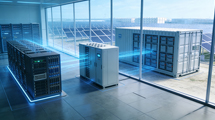
Optimize the power source structure and energy storage allocation ratio of new energy bases in deserts, Gobi and barren lands. Construct regulating power sources such as concentrating solar power (CSP) according to local conditions, reasonably control the demand for coal-fired power installed capacity in newly-built bases, and encourage deep coordination between new energy and coal power through molten salt thermal storage for peak shaving, on-site green ammonia production and co-firing, so as to raise the proportion of green electricity in such bases. Support qualified regions to give full play to the supporting and regulating functions of concentrating solar power, pumped storage and new-type energy storage, and explore the development of 100% new energy bases. Leverage the characteristics of hydropower including large rotational inertia, fast start-stop and precise regulation, and actively promote the integrated hydro-wind-solar development in major river basins. Explore the construction of new-type integrated hydro-wind-solar bases with pumped storage, new-type energy storage and other regulating power sources to drive large-scale, high-quality development of surrounding wind and solar resources. In light of local resource endowments and system regulation needs, push forward the complementary development of wind, solar, gas and storage for centralized new energy projects within provinces.
(2) Strengthen Intensive and Compound Utilization of Space for New Energy Development
Carry out intensive site selection for large new energy bases in desert, Gobi, barren land and hydro-wind-solar projects. Guide all types of centralized new energy projects to adopt co-located wind and solar construction to realize intensive sharing of site space, power transmission and transformation facilities and regulation capacity. Gradually renovate and upgrade wind and photovoltaic power projects to improve land use efficiency. Encourage mining areas to develop photovoltaic, wind power and other new energy resources by utilizing idle land and subsidence areas. Promote the cluster development of offshore wind power, intensively arrange offshore transmission cable corridors and landing points, and encourage shared transmission channels. Explore the joint use of infrastructure for marine energy development and various marine activities to improve the efficiency and benefits of three-dimensional utilization of sea areas.
(3) Promote Integrated Development of Distributed New Energy in Multiple Fields
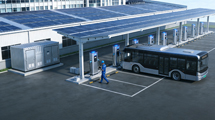
Push forward the integrated development of transportation and energy. Encourage the construction of integrated facilities of new energy and surrounding energy consumption at transportation sites including expressway service areas, highway slopes and stations, railway stations, airports and ports. Actively deploy technologies such as flexible convergence access, smart microgrids and vehicle-to-grid (V2G), raise the proportion of local development and utilization, promote large-scale application of new energy heavy-duty trucks and supporting energy replenishment infrastructure, and encourage the integrated development of photovoltaic-storage-charging-battery swapping. Advance building-integrated photovoltaics (BIPV). Promote the synchronous planning, design and construction of photovoltaic systems with buildings, advance low-carbon energy consumption and clean heating of buildings, and construct new-type buildings with "photovoltaic, storage, direct current and flexibility". Further push forward the rural energy revolution. On the premise of strictly complying with land use policies, integrate distributed wind power, distributed photovoltaics, hydropower and other rural resources through new models and business forms, enhance the capability of independent and reliable power supply in rural areas, and facilitate local consumption of new energy in rural regions. Support the development of multi-energy complementary marine energy on islands and improve the capacity to guarantee marine energy consumption.
(4) Promote Integrated Aggregation and Operation of New Energy
Continuously improve the forecasting accuracy of new energy generation power. Adopt advanced grid-forming technologies, push forward coordinated joint optimal control of multiple new energy varieties, comprehensively enhance the observability, measurability, adjustability and controllability of new energy, and build a batch of system-friendly new energy power stations. Encourage the integrated dispatching of new energy and supporting energy storage. Explore substantive joint operation between new energy and other power sources under certain conditions, formulate market participation strategies as a whole to lift market competitiveness. Accelerate digital upgrading and renovation. On the basis of meeting the cybersecurity requirements for power monitoring systems, promote centralized monitoring and integrated operation, maintenance and overhaul of each station in new energy bases to improve operational efficiency. Speed up the large-scale development of virtual power plants and strengthen the aggregation and coordination of dispersed power resources.
III. Vigorously Promote the Coordinated Development of New Energy and Multiple Industries
(5) Accelerate the "Green Manufacturing with Green Power" of the New Energy Industrial Chain
In regions rich in new energy resources, increase the application of green power and spatial agglomeration efficiency for new energy equipment manufacturing, build more competitive new energy manufacturing bases, strengthen collaborative innovation of upstream and downstream industrial chains, and explore the establishment of an integrated new energy industrial system. Promote full-chain green manufacturing, and carry out green transformation of raw material mining and processing, key component manufacturing and product production processes of new energy. Support industrial parks dominated by new energy to adopt new business forms such as green power direct connection, smart microgrids (source-grid-load-storage integration), new energy access to incremental distribution networks, as well as green certificate and green power trading. Build low-carbon and zero-carbon parks with multi-energy complementation and high self-sufficiency, promote the coordinated reduction of pollution and carbon emissions in industrial parks, and achieve a higher proportion of "green manufacturing with green power".
(6) Coordinate the Coordinated Optimization and Upgrading of New Energy and Traditional Industries
Guide high-energy-consuming industries to relocate to regions with abundant new energy resources and sound resource and environmental carrying capacity. Optimize the layout of major productive forces and infrastructure guided by new energy resources to realize local consumption via "generate and consume power in the west". Guide key industries including petroleum, petrochemical, chemical, steel and non-ferrous metal industries to optimize production processes, renovate captive power plants and scientifically deploy energy storage facilities based on local resource endowments and industrial foundations, systematically improve load regulation capacity, jointly reduce energy consumption costs and achieve efficient consumption of new energy. Encourage other traditional industries to carry out green product design and flexible transformation of production processes, jointly reduce the carbon footprint throughout the product lifecycle and enhance green competitiveness. Through layout optimization and coordinated operation of new energy and traditional industries, establish a new industrial energy consumption system matching the characteristics of new energy.
(7) Actively Promote the Integrated and Mutually Boosting Development of New Energy and Emerging Industries
In combination with the construction of the East-West Computing Transfer Project, coordinate the green power demand of computing facilities and new energy resource endowments, promote the coordinated planning of new energy bases and computing facilities, and explore building computing facilities nearby relying on offshore wind power bases. Tap the temporal and spatial adjustable potential of computing loads by category, boost the integrated operation of power and computing networks, and provide green power support for building a national integrated computing network. In regions with abundant new energy resources and solid manufacturing foundation, promote the coordinated layout and cluster development of emerging industries such as new materials, high-end equipment manufacturing, energy conservation and environmental protection together with new energy, and accelerate the formation of a new industrial ecosystem of "boosting new industries with new energy".
IV. Actively Promote Diversified Non-Electric Utilization of New Energy
(8) Improve the Coordinated Development of Wind-Solar-Hydrogen-Storage Systems
Strengthen research on key technologies such as wide-range fast dynamic operation of power-to-hydrogen and joint control of multiple electrolyzers. Improve the technical performance of electrolyzers, expand the regulation range, response speed and precision of water electrolysis for hydrogen production to better adapt to the fluctuation characteristics of new energy. Optimize the matching ratio of wind and solar power, rationally deploy electricity and hydrogen storage facilities, develop an integrated adaptive and self-regulation system for new energy generation, hydrogen production and storage facilities, and hydrogen loads, and raise the level of coordinated optimal control and self-balancing capacity of integrated wind-solar-hydrogen-storage systems. Promote the development of weak grid-connected and off-grid hydrogen production modes powered by new energy.
(9) Steadily Build Comprehensive Industrial Bases for Green Hydrogen, Ammonia and Methanol (Hydrogen-Based Energy)
Support local governments to plan and develop hydrogen-based energy industries such as green hydrogen, ammonia and methanol and sustainable aviation fuel in light of green development needs and resource conditions. Focus on planning and constructing comprehensive industrial bases for renewable energy hydrogen, ammonia and methanol production in regions with great wind and solar development potential and abundant biomass and water resources. Coordinate both supply and demand sides, scientifically plan infrastructure such as transmission pipelines, refueling and transshipment ports, and orderly promote the construction of cross-provincial transmission systems. Support large-scale production of green hydrogen, ammonia and methanol in desert-Gobi-barren land and hydro-wind-solar large bases, promote their application in key sectors such as coal chemical industry and metallurgy, and facilitate industrial coupling development. Encourage coastal areas to explore technologies for hydrogen, ammonia and methanol production by offshore wind power and develop green fuel bunkering for shipping.
(10) Orderly Promote the Application of New Energy for Heating
Encourage industrial parks with strong heating (cooling) demand such as textile, pharmaceutical, paper-making and food processing industries to build multi-energy coupled comprehensive energy supply stations dominated by new energy via renewable electricity heating, heat pump heating (cooling), integrated photovoltaic and solar thermal systems. Identify the potential of new energy heating resources, scientifically deploy geothermal heating, strengthen cascade utilization of geothermal energy, develop heating modes with direct green power utilization such as green power direct connection according to local conditions, actively explore the efficient complementary utilization of multiple heat sources including geothermal energy, wind-solar power, biomass and traditional fossil fuels, and promote the organic integration of new energy heating and existing heating systems. Leverage the flexible regulation advantages of thermal systems, promote joint optimal dispatching and operation of new energy and thermal systems, and explore the coupled application of new energy heating with long-term thermal storage technologies such as rock and water thermal storage.
V. Strengthen Organizational Support
(11) Organize Project Construction in an Active and Orderly Manner
NEA will give priority support to the construction of new energy integrated projects in regions with high new energy penetration. Provincial energy authorities shall strengthen overall coordination and factor guarantee during project organization and construction, reasonably arrange project scale in new energy development and construction plans, enhance cross-departmental cooperation to form joint work force, and track and monitor project construction and operation in a timely manner. NEA dispatched agencies and local energy authorities shall conduct supervision over project grid connection and grid-related safety in accordance with their respective duties. NEA will summarize and promote advanced experience of typical projects.
(12) Optimize Investment and Development Management of Projects
Optimize the approval (filing), grid connection, power business license processing and other procedures for new energy integrated projects, and encourage one-stop handling of relevant formalities for projects as a whole. Encourage local governments to study multi-party cooperation mechanisms for integrated projects of new energy and industries in light of actual conditions. Study the support for qualified integrated new energy projects through local government special bonds.
(13) Optimize Power Dispatching Mechanisms
On the premise of ensuring safe and stable grid operation, promote the coordinated optimal dispatching of desert-Gobi-barren land, hydro-wind-solar and offshore new energy bases. Actively realize the aggregation and regulation of distributed resources through virtual power plants and other modes. Encourage integrated projects of new energy and industries to improve the coordination and self-balancing capacity of source-grid-load-storage elements. Refine and improve grid-connection dispatching technical standards, operation rules and assessment rules for various projects, and clarify the regulatory relations, rights and responsibilities of each element.
(14) Improve Market Trading and Certification Mechanisms
Support new energy bases in desert-Gobi-barren land and hydro-wind-solar bases to participate in power market transactions in an integrated manner. Promote multi-year green power purchase agreements, and improve the mechanism for integrated new energy-industry projects to participate in markets and transaction settlement. Actively explore the fair participation of integrated new energy projects in the energy market and power auxiliary service market. Push forward the improvement of the reliable capacity compensation mechanism, and explore including qualified integrated new energy projects into the scope of capacity compensation. Explore the establishment of certification mechanisms for non-electric energy carriers such as green hydrogen, ammonia and methanol, and gradually improve green evaluation standards, certification rules and labeling systems.
National Energy Administration